How a 40,000-hour trio controls a Rust server through tempo, gear and online raids
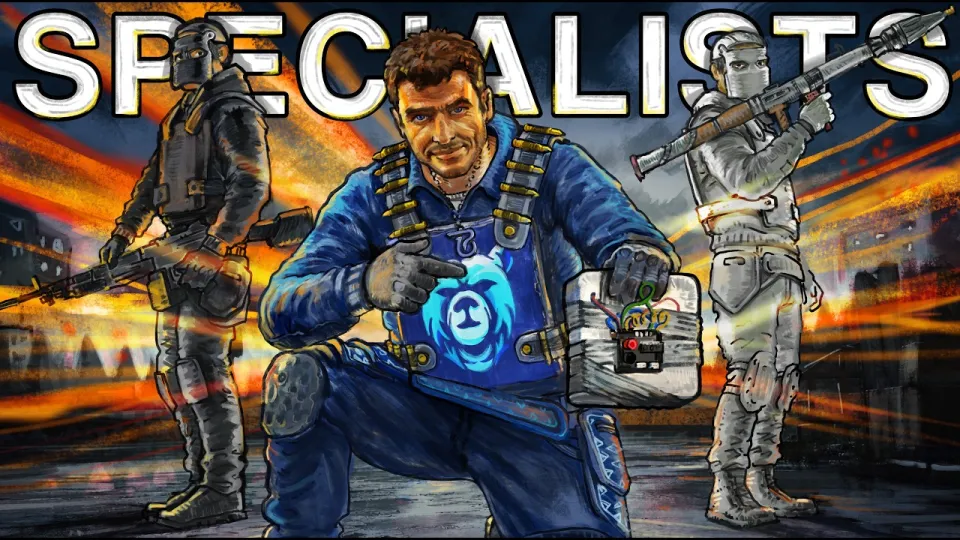
Video: How a 40,000-Hour Trio CONTROLS a SERVER - Rust
Need articles like this for your video? They help promote it on YouTube and Google — order them in the Telegram bot @sat_sit_bot. The bot writes and publishes the articles itself (with your YouTube video embedded) on popular topical websites (no ads). Free trial — 50 articles.
· based on the channel Blooprint
A 40,000-hour trio controls a Rust server by compressing the early wipe into a few decisive hours, then converting that lead into gear, map pressure and online raids that other groups cannot answer. Blooprint, Disfigure and Nine start a fresh wipe on a 500+ population server with no grand plan and end up raiding most of the competition. The pattern is repeatable: win the first fights, keep the loot moving, and never let rivals rebuild in peace. You can watch the full run on Blooprint's channel and catch his live sessions through his Twitch stream.
What 40,000 hours actually buys a Rust trio
Experience in Rust shows up as fewer wasted minutes rather than better flick shots. A trio with tens of thousands of combined hours already knows which monument to hit first, how many nodes a furnace run needs and when a fight is worth taking. That knowledge removes the hesitation that kills most fresh-wipe groups.
The practical advantages are concrete:
- Faster start. Everyone knows their job on minute one — one player farms, one builds, one scouts or contests the nearest monument.
- Cleaner base decisions. A compact, cheap-to-upkeep base goes up early, with room to expand after the first successful raid instead of a half-finished compound.
- Better fight selection. The trio avoids fights it cannot win and commits hard when it can, which keeps gear in the team's hands instead of the enemy's.
- Shared information. Callouts are short and consistent, so three players act like one unit during roams and defenses.
That is why the group can dominate a high-population server without a large clan: the hours replace numbers.
How the trio sets the pace on a fresh wipe
The first hours decide whether a trio becomes the server's problem or just another group farming scrap. Blooprint's squad treats wipe day as a race with checkpoints rather than a grind.
- First checkpoint: a working base. A small starter with a few doors, a furnace and enough storage to hold loot from the first fights. Upkeep stays low, so nobody is stuck farming stone all day.
- Second checkpoint: weapons that win fights. Early smg or bow pressure, then a push toward tier-two guns as soon as components allow.
- Third checkpoint: map presence. Roaming near monuments and popular roads creates contact, and contact creates loot.
- Fourth checkpoint: raid readiness. Sulfur, explosives and a scouting report on a nearby group are gathered in parallel, not one after another.
A trio that hits all four checkpoints before most groups finish their second base is already controlling the server's economy. Rivals spend their wipe reacting instead of progressing.
Base design and the black catacomb skin effect
A base in a high-population Rust server is a pressure tool, not just storage. The trio's build is compact enough to defend with three players and layered enough that a raider has to commit serious explosives to reach loot. Dark, catacomb-style wall skins make interiors harder to read during a breach, and viewers consistently single out that look as one of the best build skins in the game.
Key design principles that make a trio base survive:
- Short internal sightlines. Defenders know every corner; intruders do not.
- Decoy rooms. Cheap compartments absorb the first rockets and buy time for a counter-push.
- Separated loot. Core loot is split so a single breach never ends the wipe.
- Fast access to the roof. A quick route upstairs lets defenders contest online raiders from above.
A base that is annoying to raid discourages casual attempts and forces serious groups to spend resources they would rather use elsewhere.
Why the M2 and L9 roams matter
Top-tier gear only pays off when it leaves the base. Blooprint roaming with an M2 and an L9 is the moment the trio stops surviving and starts dictating fights, and long-time viewers read it as a return to classic Rust aggression. The logic is simple: a gun in a box protects nothing, while a gun on a roam generates kills, loot and map control.
Roaming as a trio follows a few rules:
- One player leads, two support. The lead takes first contact, the others flank or hold escape routes.
- Loot goes home early. Dropping valuables after a good fight beats losing everything to a counter-roam.
- Rotate after every kill. Gunfire draws attention, and a static trio becomes a target.
- Take fights near cover. Rocks, trees and terrain give a trio room to reset a losing exchange.
Gear fear is the most common reason groups stall out. The trio treats expensive weapons as tools with an expected loss rate, which is exactly why they end up with more of them.
Online raids as the main pressure tool
Online raiding is how a strong trio turns a lead into control. Hitting a group while its members are online forces a defense, generates real fights and prevents the slow rebuild that lets rivals recover. The alternative — offline raiding — yields loot but no pressure, and on a crowded server pressure is the point.
A workable online-raid routine looks like this:
- Scout first. Confirm who is online, how many are home and which side of the base is weakest.
- Stage close. Move explosives, extra guns and healing to a forward position before the first rocket.
- Breach fast. Speed matters more than efficiency; a slow raid gives defenders time to organize and counter-raiders time to arrive.
- Expect counters. Keep one player watching approaches, and treat every third-party arrival as a fight, not a surprise.
- Secure and reset. Move loot out in stages and repair or relocate before the next raid.
When a trio raids consistently, the server's other groups start spending their wipes defending instead of progressing, which is control in practice.
Common doubts about dominant trios and lurker plays
Dominance on a high-population server always raises questions, and the audience reactions to this wipe reflect the usual ones. Some viewers wonder how a small group keeps finding fights and gear so consistently, while others question sudden spikes in skill from players who seemed passive earlier. Others simply enjoy the story without ever installing the game.
A few honest answers to those doubts:
- Consistency looks like luck. A trio that roams constantly gets more encounters, so it also gets more highlight moments than a group that stays home.
- Gear fear is the real gap. Groups that never take expensive guns out of the base lose the fights that decide the wipe.
- High-population servers are chaotic. Third parties, counters and random encounters explain many sudden reversals better than any single explanation.
- Non-players still follow the story. A large share of the audience has never touched Rust and experiences wipes entirely through narrative videos.
That mix of skepticism and investment is part of why trio wipe stories keep performing: the stakes are readable even to people who have never crafted a single explosive.
Useful links
- Blooprint on Twitch — live streams and wipe progress in real time.
- Blooprint on Kick — alternative streaming channel.
- Blooprint on TikTok — short clips and highlights.
- Blooprint on Twitter — announcements and updates.
- Blooprint's Discord — community, squad-finding and discussion.
Bottom line
A 40,000-hour trio controls a Rust server by turning time into tempo: a fast start, a defensible base, expensive guns that actually leave the base, and a steady schedule of online raids that keeps rivals on the back foot. Blooprint, Disfigure and Nine show that three coordinated players can outpressure a much larger population when every decision is made faster than the competition. The channel Blooprint built this run around remains the best place to see the full arc, from a quiet wipe start to raiding the server's competition. If you want to follow the next wipe live, start with Blooprint's Twitch channel.
Key takeaways
- Blooprint, Disfigure and Nine bring roughly 40,000 combined hours into a single trio on a 500+ population server.
- The wipe begins without big ambitions and escalates into raiding most of the competition on the server.
- Gear like the M2 and L9 leaves the base on roams instead of sitting in boxes, which is what turns fights into loot.
- Online raids are the core pressure tool: hitting rivals while they are online forces fights, defenses and counter-raids.
- The trio's edge is tempo and coordination, not raw aim: shared tasks, fast crafting and constant scouting.
Source: How a 40,000-Hour Trio CONTROLS a SERVER - Rust · Markdown version
Questions & answers
How does a three-player group dominate a 500+ population Rust server?
By winning the first hours rather than the biggest fights. A trio that builds a compact base, secures tier-two gear early and roams constantly generates more loot and map pressure than larger, slower groups. Coordination replaces numbers.
Is online raiding better than offline raiding in Rust?
Online raiding creates pressure: defenders fight back, loot moves, and rivals lose time rebuilding instead of progressing. Offline raids are safer but leave the server's balance unchanged, which is why competitive trios favor online hits when they have the resources.
Why do experienced Rust players take M2s and L9s out on roams?
Because a gun in a box generates nothing. Expensive weapons on a roam create kills, loot and control of key areas, and a trio can protect the carrier with support and rotations. Gear fear is what keeps most groups poor.
Can someone enjoy Rust wipe videos without playing the game?
Yes. A large part of the audience has never played Rust and follows wipes purely as stories with clear stakes, rivalries and raids. Narrative-driven channels like Blooprint build those arcs so the videos work without any game knowledge.